


The Ebow Or Ebow
(Brand Name For "Electronic Bow" Or Energy Bow) (Often Spelled E-Bow
In Common Usage) May Be A Hand-Held, Powered Device For Taking Part In The Electrical Stringed Instrument, Made-Up By Greg Heet In 1969. Rather Than Having The Strings Hit By The Fingers Or A Choose, They're Captive By The Magnetism Field Created By The Device, Manufacturing A Sound Paying Homage To Employing A Bow On The Strings.
Music is love
-
Amika Shail Upcoming Singer Hin...
-
Mexican Vihuela Vihuela Is That The Name Of 2 Totally Different Guitar-Like String Instruments: The Histo...
-
 Usha Uthup Present – 1966 Hindi , Marathi , Tamil , Telugu , Assamese , Bengali , Gujarati , Punjabi , English ...
 -
 Mahathi Present -2003 Tamil , Telugu , Kannada , Malayalam Mahathi is associate degree ...
 -
Ghantasala (1942 – 1974) Hindi , Tamil , Telugu , Kannada , Malayal...
-
Keyboard Instruments Instruments Like The Instrument , Pipe Organ, Accordion, And Piano Square Measure Typically ...
-
Wagner Tuba The Wagner Sousaphone Could Be A Relatively Rare Brass Instrument That Mixes Components Of ...
Tuesday, 1 January 2013
Ebow 
The Ebow Is Employed To Supply A Range Of Sounds Not Typically Playable On An Electrical Stringed Instrument. These Sounds Square Measure Created By A String Driver, That Gets
Its Signaling By An Indoor Pick up, That Works Sort Of A Stringed Instrument Pick up. Its Signal Is Amplified And Drives The Opposite Coil, That amplifies The String Vibrations. With This Circuit The Player Will Produce A Non stop String Vibration.

Drum Machine 
A Drum Machine
Is Associate
In Nursing Electronic Device Designed To Imitate The Sound Of Drums Or Alternative percussion Instruments. They're Utilized In A Range Of Musical Genres, Not Simply Strictly Electronic Music. They' readditionally A Standard Necessity Once Session Drummers Don't Seem To Be Obtainable Or Desired.
Most Modern Drum
Machines Ar Sequencers With A Sample Playback (Rompler) Or Synthesizer Element That Focuses On the Replica Of Drum Timbres. Tho' Options Vary From Model To Model, Several Trendy Drum Machines May manufacture Distinctive Sounds, And Permit The User To Compose Distinctive Drum Beats.
Stylophone 
The Stylophone Could Be A Miniature Analog Stylus-Operated
Synthesizer Fictional In 1967 By Brian Jarvis And Going Into Production In 1968. It Consists
Of A Metal Keyboard Contend By Touching It With A Stylus — Every Note Being Connected To A Voltage-Controlled Generator Via A Different-Value Electrical Device - So Closing A Circuit. The Sole Different managements Were An Influence Switch And A Sound Control On The Front Panel Beside The Keyboard, And A calibration Management On The Rear. Some 3 Million Stylophones Were Sold-Out, Largely As Children's Toys.
The Stylophone
Was Out There In 3 Variants: Customary, Bass And Treble, The Quality One Being Far And Away The Foremost Common. There Was Additionally A Bigger Version Known As The 350s With A Lot Of Notes On The Keyboard, Numerous Voices, A Completely Unique 'Wah-Wah' Impact That Was Controlled By Moving One's Reach A Photo-Sensor, And 2 Styluses.
In The Mid-70s A Replacement Model Appeared That Featured A Faux Wood Result On The Speaker Panel, And ,Additional Significantly, A Volume Management. (Previous Stylophones Had Been Infamous For Being Too Loud In Quiet Situations). This Was Shortly Before The
Stylophone Ceased Production Altogether In 1975.
Rolf Harris
Appeared For Many Years Because The Stylophone's Advertising Interpreter Within The Uk, And Appeared On Several "Play-Along" Records Oversubscribed By The Manufacturer.
Laser Harp 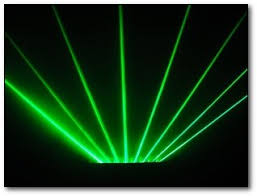
A Optical Maser Harp Is Associate In
Nursing Electronic Device Consisting Of Many Optical Maser Beams To Be Blocked, In Analogy With The Plucking Of The
Strings Of A Harp, So As To Provide Sounds. The Optical Maser Harp Has Been Popularized By Jean Michel Jarre, And Has Been
A Status Feature Of Virtually All His Concerts Since 1981. In Recent
Times, A Awfully Similar Version Has Conjointly Been Employed In Concerts By British Electronic Musician Very Little boots.
It Has Afterwards Been Employed In Variety Of Various Styles. They Need Additionally Been Employed In Public Art Installations Like Those Created By Jen Lewin On Show At Lincoln Center In 2000 And Burning Man 2005.
Denis D'or 
The Denis D'or ("Golden Dionysus") Is, Within The Broadest Sense, The Primary Electrical Instrument In History.
The Denis D'or ("Golden Dionysus") Is, Within The Broadest Sense, The Primary Electrical Instrument In History.
It Was Fancied And Created By The Czech The ologist Václav Prokop Diviš (1698 - 1765) — His Cognomen Is Pronounced "Deevish" And Sometimes Spelled "Divisch" — At His
Parish Within The Moravian City Přímětice Close Toznojmo Within The South-East Of What's Currently The Czech Republic. He Was Additionally A Pioneer Of Analysis into Electricity, Being Most Famed For Having Fancied The Lightning Rod In Europe, Contemporaneously
With However severally Of Scientist.
His Passion For Music Was Topped By The Development Of Quite Extraordinary Instrument He Named "Denis
D'or", With The French "Denis" Etymologically Going Back To
"Dionysus", Whose Czech Counterpart Is "Diviš" — Thus The Name.
The Earliest Written Mention Of The Denis D'or
Dates From 1753, However It's Possible That It Already Existed Around 1748. Some Sources Even Date Its
Existence As So Much Back Because The Year 1730, However This Claim Is traditionally Unreasonable And Not Supported By Any Offered Info On Diviš's Life History And Work. Sadly, Once diviš's Death In 1765 The Distinctive Instrument Was Sold-Out And Eventually Delivered To National Capital, Wherever It Presently Nonexistent While Not Trace. What's A Lot Of, Living Documents Concerning The Denis D'or square
Measure Short And Really Few, Therefore Our Image Of It Should Stay Rather Fractional. A Minimum Of some Facts Square Measure Familiar, However, And These Will Be Summarized As Follows:
The Denis D'or
Had Fourteen Registers, Most Of That Were Two fold, And Its Complicated Mechanism Fitted During Asymmetrical Wood Cupboard Equipped With A Keyboard And A Pedal. It Had Been Regarding A Hundred And Fifty Cm Long (5 Ft), Ninety Cm Wide (3 Ft), And One Hundred Twenty Cm High (4 Ft). Basically, It Had Been A Stringed Instrument Not Not Like A Stringed Instrument — In Alternative Words, The Strings Were Smitten, Not Plucked. However, The Suspension And Also The Tautening Of The Various Metal Strings (Which, It Is Said,
Numbered Associate astonishing 790) Were Way More Elaborate. The Ingenious Mechanism, That Had Been Figured Out By Diviš With conscientious Mathematical Accuracy, Was Such The Denis D'or May Imitate The Sounds Of A Full Type Of Alternative instruments, As Well As Chordophones Like Harpsichords, Harps And Lutes, And Even Wind Instruments. This Was primarily Attributable To The Exceptional Responsiveness And Combinability Of The
Stops, That Allowable The Player To Vary The Sound In Varied Ways That, Thereby Generating Much More Than 100 Totally Different Tonal Voices Altogether. However The Foremost Special Feature Was That Diviš (Temporarily) Charged The Iron
Strings With Electricity so As That The Sound Quality May Be Increased — "Purified", Thus To Talk. This Was Associate Absolute Novelty At The Time. In Addition, He Put In A Gimmick So, Any Time He Needed, The Player May Well Be Given An Electrical Shock.
Diviš Was The Primary Person To Foster The Concept Of Associate In Nursing Aesthetic Affiliation Between Music And
Electricity. Before Him No One Had Perceived The Aesthetic Potential Of Electro-Acoustic Effects. Within The Face Of Electrical Analysis Still Being In Its Early
Infancy Within The Middle Of The Eighteenth Century, This Revolutionary Plan may Then, Of Course, Solely Be Technically Accomplished By Diviš Within The Most Primitive Method. But, However, Those Historical Circumstances Will not Belittle The Very Fact That The Denis D'or Can With Reason Be Considered The Forefather Of All
Electrophones, A Minimum Of From The Idealistic Purpose Of Read.
Indeed, Once The German The ologist Johann Ludwig Fricker (1729-1766)
Visited Diviš In 1753 And Saw The Denis D'ortogether With His Own Eyes, He Cited It Journal Of The University Of Tübingen
As An "Electrisch-Musicalische[S] Instrument" - The Literal
Translation Of That Is "Electric Musical Instrument".
Electronic Instruments
An Electronic Device Could Be A Device That Produces Its Sounds Victimisation Natural Philosophy. Such An instrument Sounds By
Outputting An Electrical Audio Signal That Ultimately Drives A Electro-Acoustic Transducer.
An Musical Instrument Might Embrace A Computer Program For Dominant Its Sound, Typically By Adjusting The Pitch, Frequency, Or Length Of Every Note. However, It's More And More Common To Separate Computer Program and Sound-Generating
Functions Into A Music Controller (Input Device) And A Music Synthesizer, Severally, With The 2 devices Human Activity Through A Performing Arts Description Language Like Midi Or Open Sound Management. All Electronic Musical
Instruments May Be Viewed As A Set Of Audio Signal Process Applications. Straight forward electronic Musical
Instruments Ar Typically Known As Sound Effects; The Border Between Sound Effects And Actual
Musical Instruments Is Commonly Hazy.
French Musician And Engineer Edgard Varèse Created A Spread Of Compositions Exploitation Electronic Horns, Whistles, And Tape. Most Notably, He Wrote
Poème Électronique For The Phillips Marquee At The National Capital World truthful In 1958.
Electronic Musical
Instruments Area Unit Currently Wide Employed In Most Sorts Of Music. Development Of Recent Electronic Musical Instruments, Controllers, And Synthesizers
Continues To Be A Extremely Active And knowledge Domain Field Of Analysis. Specialised Conferences, Notably The International Conference On New
Interfaces For Musical Expression, Have Organized To Report Innovative Work, Similarly On Give A Showcase For Artistsun Agency Perform Or Produce Music With New Electronic Music Instruments, Controllers, And
Synthesizers.
Subscribe to:
Posts (Atom)