Music is love

Saturday, 3 November 2012

Dotara              

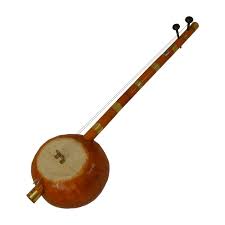
        The Dotara (Or Dotar) Could Be A 2 Or Four Or Some Times 5 Stringed Device Resembling Additional To Chordophonethan A Stringed Instrument. It's Usually Utilized In State, Bangladesh, Province & Bihar, And Dates From The 15th-16th Century Once It Absolutely Was Adopted By The Ascetic Cults Of Bauls And Fakirs.The Equivalent As A Conventional Long-Necked Two-Stringed Lute Is Found In Central Asia As Dutar (Also Doutar).
        The Dotara Is That The Single most Necessary Folks Instrument Utilized In Varied Genres Of People Music Throughout The Land Of Bengal. It's 2 Main Forms, The Bangla And Therefore The Bhawaiya. The Bangla Kind Originated within The Rahr Bangla Region, Wherever It's Still Preponderantly Contend. It's Metal Strings, That Provides It A Brighter Tone Than Different Instruments Contend Within The Space. Though A Dotara Will Have 4-5 String, However each Song You'll Play With The Assistance Of 2 Main String ( Different String Square Measure Wont To Provideadditional Variation). That's Why Its Name Is Dotara (Do = 2, Tar = String).
         The Name Of The Instrument It self Suggests Two-Strings: Do Is 'Two' And Tar Is 'String'—Which Suffices Each As An Octave For An Entire Set Of Notes During A Scale Also Because The Bass And Treble Of The Percussion (The Low Arrange String Serving As Bass And Also The Higher One As Treble). However, The Up To Date Instrument Will Have As Several As Four Strings Or A Lot Of (Which Offers A Trifle Over 2 And A [*Fr1] Octaves) And Will Increase The Flexibility Of The Instrument In Terms Of Each Music And Rhythm. With Four Strings.
      The Standardization Structure Is As Follows (From high To Bottom)—Do(Lower)-Soh(Lower)-Do-Fah In Bengali The Notes Are: Komol Ma - Komol Reserves - Ma - Metallic Element, With Do Being The Dominant/Root Note Of The Song.
      The Dotora (A.K.A. Dotar, Or Dotara) Is Associate In Nursing Instrument A Lot Of Related To The Musical Culture Of The Bengali Individuals. This Instrument Is Found Throughout West Bengal, Bangladesh, And Even State, And Japanese bihar. This Instrument Is Greatly Favoured By The Wandering Minstrels Referred To As The Baul. This Instrument Is Also thought Of As A Bengali Version Of The Rabab. Though The Name Is That The Same, This Instrument Mustn't Be Confused With The Easy 2 Stringed Dotar Found Through Out South Asia.
         The Origin Of The Terms "Dotar" Or "Dotora" Square Measure Fascinating. The Word Is Found In Bengali (I.E., Bangla Bhasha), That Could Be A Member Of The Japanese Cluster Of Indo-Aryan Languages (Grierson,1903). The Etymology Is Predicated Upon 3 Elements, Do-Tar-A. In Bengali "Do" Suggests That "Two"; "Tar" Suggests That "String"; And Also The "A" Appended To The Tip Suggests That "Of". Therefore, The Word Dotara, Suggests That "Of 2 Strings". 
           Naturally There Square Measure Regional Variations To Pronunciation. Particularly Note That The Term "Tar" Collectively Would realize In Hindi And Urdu, Acquires The A Lot Of Open Bengali Pronunciation Of "Tor". Alternative Regional Variations also Are Simply Found. For Example, Within The Rangpuri Accent It's Pronounced "Dotra" However It's additionally Pronounced "Dotora" In Rangpuri's A Lot Of Poetical Forms, (E.G., Vaoaiya Lyrics.) It's Fascinating To Notice That, Though The Term "Dotora" Implies 2 Strings, Most Instruments Have A Minimum Of 4 Strings, And Even Sixisn't Uncommon.
          As With Any Folks Instrument, Regional Variations In Construction Abound; But, There Area Unit 2 Main Designs. In banglaDesh, One In All These Is Found Within The North And Therefore The Different Is Found Within The South. These Show Many Variations In Each Construction, Tone, And Usage.
      The Figure Below Shows A Typical Example Of The Southern Version Of The Dotora. This Version Is Usually Utilized In A Large Form Of Bengali Music. Notice The Carving At The Higher Finish Of The Necks, These Area Unit Typically Styles Of Animals, Peacocks Or Different Birds. It's Attention-Grabbing To Notice That This Version Is Additionally Referred To As Swaraj And Surasanggraha, Or Rahr Bangla.
        The Dotara (“Two-Stringed”) Instrument From Geographical Area Is Kind Of Common In Bengali Popular Music Genre, Pious Music, And Different Archipelago Musical Designs. Despite Its Name, The Dotara Really Has Four Strings. Its Form Reminds One In All A Primitive Sarod Or Rabab, However Smaller. It's A Body Made From Wood With A Hollow resonator Mounted With Goat Skin. The Goat Skin Is Punctured With Little Holes (Known Because The Chad) For Acoustic Functions. It's Constant Principle Of Getting A Hole In An Exceedingly Stringed Instrument. Not Like several Of The Classical Instruments, This Instrument May Be A Moveable One And Plenty Of Dotaras Can Contain A Strap, Thus One Might Stand And Wear It At Constant Time. The Strings Ar Made From Metal, However, A Social Groupanalog Found In Northern Bangla Desh Uses Gut Strings To Create A Sound Like The Rabab.
        One Could Play This Instrument Sort Of A Jazzy Instrument, By Standardisation The Strings To The Tonic And Also The fifth (Or Fourth Counting On The Raga Played/Sung) And Easily Strumming Them In An Exceedingly Jazzy Fashion. The Opposite Means Is To Play Melodies By Fretting One String At A Time, Or Fretting 2 Strings At A Time, To Be Turn Out ‘Fifths’ Or ‘Fourths’ For Every Note, However Won’t Play The ‘Fifth’ Or ‘Fourth’ Note On The Second String, However Can Pluck It If Necessary To Form Atiny Low Harmony.


Thavil                   

      The Thavil  Or Tavil May Be A Barrel Formed Drum From South India. It's Employed In Temple,Folks And Carnatic Music, Typically Concomitant The Nadaswaram. The Thavil And Therefore The Nadaswaram Square Measure Essential Ingredients Of Ancient Festivals And Ceremonies In South India.
       In Folk Contexts, A Try Of Wider, Slimmer Sticks Is Usually Used. Thanjavur Is Legendary For Thavil, Therefore Referred To As Thanjavur Thavil. In Kollywood Filmi Songs Thavils Square Measure Largely Used, Notable Movies: "Thillaanaa Mohanambal", "Paruthiveeran", "Karagattakaran".
      Found Solely In Extreme South, Tavil Instrument Could Be A Barrel Formed Percussive Instrument, That Is Taken Into Account As A Necessary Ingredient Of Ancient Festivals And Ceremonies. It Possesses A Shell Of Nearly Spherical Proportions And Utilized In Ethnic Music & Carnatic Music. Tavil Provided By North American Nation Is That The common Accompaniment To The Nadaswaram And Is Contend With The Hands With Thimbles Placed Over The Hands.
        Tavil Is Associate Instrument Found Solely Within The Extreme South. It's A Shell Of Nearly Spherical Proportions Thatis Open On Each Side. There Square Measure 2 Skins Wrapped Around 2 Giant Hemp Hoops. The Left Aspect Is Vie With A Stick. The Proper Aspect Is Vie With The Hands With Metal Thimbles Placed Over The Fingers To Administer A Pointy sound. This Instrument Is Often Vie In South Indian Temples And Weddings. It's The Foremost Common Accompaniment To The Nadaswaram.
       Thavil Or Tavil May Be A Terribly Renowned And A Usually Used Instrument In South India. It's Employed Inpeople Songs, Terribly Usually In Temples And In Carnatic Music. It's A Really Significantly Contend Instrument On Occasions Like Weddings, Kola And Different Ancient Festivals And Ceremonies. It's Typically Among Nadswaram.This Instrument Is Created From Wood, Animal Product And Steel. It Consists Of A Consecrate Cylindrical Shellmanufactured From Jack Fruit Wood.
       The Left Membrane Is Created Of Goat's Skin And Also The Right Membrane Is Created Of Water Buffalo's Skin. The Correct Face Contains A Larger Diameter Than The Left Face. The Correct Face Of This Instrument Is Stretched Tightly To Provide Pitch And Sharp Sound Whereas The Left Face Is Unbroken Loose To Permit the Pitch To Bounce. This Endemic Instrument Thavil Is Usually Forty Seven Cm Long.This Instrument Is Contend On In Sitting Position Or It's Tied On The Shoulder With A 
Cloth Known As 
Nadai.
        Thavil Is Contend By The Artistes With Nice Enthusiasm And Fervor. The Trained Musicians Of The Wealthy Carnatic Music Sing In Tune With The Beats Of Thavil. The Loud Beats Of Thavil Relieve The Audiences Of The Strain And Strains Of Daily Mundane Life And Refreshes Them With Revived Energy And Vigor.


Kala Electronic Tuner            

       Gandharva Loka Stocks The Kala Kc02 Clip On Electronic Tuner That Is Very Created For Ukuleles However conjointly Features A Chromatic Mode And Might Be Used For Different Instruments. Merely Clip The Compact Kala Electronic Tuner To Your Instrument's Support And Opt For One Amongst The 3 Mode Available: Chromatic, Guitar C standardisation Or Guitar D Standardisation. 
      The Massive Backlit Show Makes It Simple To Examine What You're doing In Any Surroundings. The Kala Electronic Tuner Comes With Electric Battery That Is Simple To Interchange If It Flattens.


Koto                   

        The Stringed Instrument May Be A Ancient Japanese Stringed Instrument That Shares A Typical Ascendant Withthe Trendy Chinese Guzheng. It's The National Instrument Of Japan And Generally Regarding One.8 Metres Long.
         Koto Ar Usually Made Up Of Kiri Wood And Adorned With Fine Japanese Material. They Need Thirteen Strings That Aron An Individual Basis Set Up Over Movable Bridges On The Dimension Of The Instrument. Players Will Alter The String Pitches By Moving These Bridges Before Taking Part In, And Use 3 Finger Picks (Thumb, Finger, And Middle Finger) To Pluck The Strings. It's Aforementioned That The Stringed Instrument Will Have The Lightness Of A Butterfly And Also The Power Of Thunder.
        The Stringed Instrument  May Be A Ancient Japanese Stringed Instrument, Just Like The Chinese Zheng, The Mongolian Yatga, The Korean Gayageum And Also The Vietnamese Đàn Tranh. The Stringed Instrument Is That Thenational Instrument Of Japan. Stringed Instrument Square Measure Regarding One Hundred Eighty Centimetres (71 In) Length, And Made Up Of Kiri Wood (Paulownia Tomentosa). 
       They Need Thirteen Strings That Square Measurearrange Over Thirteen Movable Bridges On The Dimension Of The Instrument. Players Will Regulate The String Pitches By Moving These Bridges Before Taking Part In, And Use 3 Finger Picks (On Thumb, Finger, And Middle Finger) To Pluck The Strings.
        One Of The Additional Recognizable Instruments Of Japan, The Stringed Instrument Consists Of A Six Foot Long Shallowreverberative Box (Made From Paulownia Wood) With A Group Of 13 Strings Stretched Over Movable Ivory Bridges. This Arrangement Creates A Harp-Like Instrument That Is Historically Contend At Floor Level By A Kneel Musician.
         The Player Has Tsume (Plectra) Hooked Up To 3 Fingers And Strums And Plucks The Strings. Higher Pitches Is Created By Pressing All The Way Down To Variable Degrees On Strings Behind The Bridges.
         Introduced From China In Concerning The Eighth Century Ad, The Stringed Instrument Was Originally A Part Of The Court Orchestra Referred To As Gagaku. The Oldest Existing Repertoire For The Stringed Instrument Outside Of Gagaku Dates Back To The Top Of The Sixteenth Century. Later Within The Edo Amount (1603-1868) The Stringed Instrument joined The Stringed Instrument In Tiny Chamber Ensembles. 
         This Was A Enormously Active Amount Within The Artsand Lots Of Parallel Genres Of Music Evolved. Music Creating Was One Among The Allowed Professions For Blind Folksand Was Part Sponsored By The Govt..
        Since The Start Of The Meiji Amount (1868-1912), And With The New Influence Of Western Musical Thought, The Stringed Instrument Has Well-Tried To Be Terribly Versatile As Associate Degree Instrument With That To Explore New Musical Forms. Therefore An Out sized Body Of Fine Up To Date Japanese Compositions Currently Exists For The Instrument.
        The Stringed Instrument Could Be A Distinctive Japanese Device. It's A History In Japan Of Over 1200 Years And now a days Will A bundant To Represent Japan's Ancient Past. This Book Examines This Fascinating Instrument In Terms Of Its Physical Type, Manufacture And Instrument Sorts, Its Performance Traditions And Social Organisations, And Its Contexts Of Performance. 
       Every Of Those Aspects Is Explored Very Well, Providing Ways In Which Of Understanding The Place Of This Ancient Instrument In Up To Date Japan. This Well Illustrated Volume Is That The Initial In English To Look At The Stringed Instrument In Such Depth. It Brings Along In One Volume A Close Study Of This Outstanding instrument.
       Koto, Additionally Referred To As Kin , Long Japanese Board Zithern Having Thirteen Silk Strings And Movable Bridges. The Body Of The Instrument Is Formed Of Paulownia Wood And Is Concerning One Hundred Ninety Cm (74 Inches) Long. Once The Entertainer Is Motion Or Seated On The Ground, The Stringed Instrument Is Command Off The Ground By 2 Legs Or A Bridge-Storage Box; In Hottest Concerts, The Instrument Is Placed On A Stand That The entertainer Will Sit On A Chair.
         The Stringed Instrument Is Contend By Plucking The Strings With The Thumb And 1st 2 fingers Of The Correct Hand, That Ar Fitted With Ivory Plectrums Referred To As Tsume. The Mitt, In Traditions Once The sixteenth Century, Might Alter The Pitch Or Sound Of Every String By Pressing Or Manipulating The Strings To The Left Of The Bridges. Varied Gapped Scale Tunings Ar Used, Betting On The Kind Of Music Being Contend.
        The Stringed Instrument Appeared Within The Japanese Court Throughout The Eighth Century And Was Referred To As The Gakusō. Faculties For The Bourgeois Were Established Within The Sixteenth Century. 2 Of These—Ikuta (Started within The Seventeenth Century) And Yamada (Opened Within The Eighteenth Century)—Continue To The Current day. Solo (Danmono) And Chamber (Sankyoku) Music Dominate The Repertory, And Within The Latter Type The instrumentalist Usually Sings Furthermore.
         Some Up To Date Composers Have Incorporated The Stringed Instrument Into Musical Group Items, And A Few Have Used The 17-String Bass Stringed Instrument (Jūshichigoto) Unreal By Miyagi Michio (1894–1956) Of The Ikuta Faculty. Long Referred To As The National Instrument Of Japan, The Stringed Instrument Has Been Fashionable From The Earliest Periods Of Japanese Musical History To The Current Day In Ensemble, Chamber, And Solo Repertoires; Its Organic Structure, Performance Apply, And Musical Characteristics Became Symbols Of Japanese Identity. The Stringed Instrument Is Said To The Chinese Zheng And Se And Therefore The Korean Kayagŭm And Kǒmungo.


Kotamo                      

        The Kotamo Could Be A Combination Of 3 Overtone Instruments: The Japanese Stringed Instrument, The Indian Tanpura And Therefore The Trendy Monochord. It's A Specially Developed Style Of Monochord Medical Aid instrument And It Unifies The Qualities Of All 3 Instruments.
        The Strings Of The Monochord Area Unit All Tuned To Precisely Identical Note, And Therefore The Four Strings Of The Tambura Area Unit Tuned In Fourth, Fifth And Octave. The Stringed Instrument Has Movable Frets And Permits Variedscales. Sometimes It's Tuned Within The Gapped Scale. The Stringed Instrument And Kambura Area Unit Eachplaced On One Aspect Of The Instrument. Once The Kotamo Is Standing Upright It's Potential To Play On Each Sidesimultanously. One Hand Passes Over The Monochord, The Opposite One Improvises On The Strings Of Stringed Instrument And Tambura. Within The Horizontal Position Each Hands Play Unceasingly On One Aspect.
         The Kotamocan Even Be Spun Around.The Kotamo Could Be A Combination Of 3 Overtone Instruments: Japanese Stringed Instrument, Indian Tambura Andfashionable Monochord. It's A Specially Developed Form Of Monochord Medical Care Instrument And It Unifies The Qualities Of All 3 Instruments. The Strings Of The Monochord Area Unit All Tuned To Precisely Identical Note, And Therefore The Four Strings Of The Tambura Area Unit Tuned In Fourth, Fifth And Octave. 
         The Stringed Instrument Has Movable Frets And Permits Varied Scales. Sometimes It's Tuned In Gapped Scale. Stringed Instrument And Tambura Area Unit Each Placed On One Facet Of The Instrument. Once The Kotamo Is Standing Upright It's Doable To Play On Each Side Simultanously. One Hand Passes Over The Monochord, The Opposite One Improvises On The Strings Of stringed Instrument And Tambura. Within The Horizontal Position Each Hands Play Endlessly On One Facet. The Kotamo Can Even Be Spun Around.